Stepping Onto California’s Roads: What New Drivers Really Need to Know About Car Insurance
Getting your driver’s license in California feels like a huge milestone, doesn’t it? That moment of freedom, the open road stretching out before you – it’s exciting. But then the questions start, especially about car insurance. Maybe you’re a parent trying to add a newly licensed teenager to your policy, or perhaps you’re an adult getting your license for the first time. Either way, the world of California auto insurance can seem a little intimidating, a maze of rules and numbers. Honestly, it often feels that way for everyone, not just new drivers.
Many people think it’s just about meeting the minimums. And yes, California does have specific requirements you absolutely must meet. But here’s where it gets interesting: simply meeting those minimums often leaves you dangerously exposed. You wouldn’t want to find yourself in a situation where a minor fender-bender turns into a life-altering financial nightmare, right? That’s why understanding more than just the basics is so important.
The Bare Minimum: What California Law Requires
Let’s start with the non-negotiables. If you’re driving in California, you’ve got to have car insurance. It’s the law. The state requires what’s called “15/30/5” liability coverage. What does that actually mean?
* **$15,000 for injury/death of one person:** This is the maximum your insurance company will pay for medical bills or other damages if you injure one person in an accident that’s your fault.
* **$30,000 for injury/death of more than one person:** If multiple people are hurt in an accident you cause, this is the total maximum payout for their injuries.
* **$5,000 for property damage:** This covers repairs or replacement for other people’s cars or property (like a fence or mailbox) that you damage.
And that’s it. Those numbers are set by the California Department of Motor Vehicles (DMV), and you need to carry proof of this coverage in your car. A simple insurance card or even digital proof on your phone will do. If you get pulled over and can’t show it, you could face fines, vehicle impoundment, or even license suspension. Nobody wants that.

Why “Minimum” Often Isn’t Enough
Okay, so you know the minimums. But here’s the thing: those numbers are pretty low, especially in a state like California. Think about it. A minor trip to the emergency room in Los Angeles or a fender bender in Orange County can easily rack up thousands of dollars in medical bills or car repairs. If you cause an accident and the costs exceed your 15/30/5 limits, guess who’s on the hook for the rest? You are.
Imagine hitting a luxury car, say, a new Tesla, in Ventura County. Even a small dent could easily cost more than $5,000 to fix. Or what if you cause an accident on a busy freeway in the Inland Empire, resulting in multiple injuries? Those $30,000 in medical coverage could be gone in a flash, leaving you personally responsible for potentially hundreds of thousands of dollars. It’s a terrifying thought, and it’s why many experienced drivers, and smart new drivers, opt for much higher limits – often 100/300/50 or even 250/500/100. It’s about protecting your financial future, not just checking a box.
The New Driver Penalty: Why Premiums Feel So High
This is where the empathy really comes in, because it’s a shock for many. New drivers, especially young ones, almost always face higher insurance premiums. It feels unfair, doesn’t it? You haven’t even had a chance to prove yourself!
But insurers see it differently. They look at statistics. And statistics show that new drivers, particularly those under 25, are statistically more likely to be involved in accidents. They lack experience, they might be more prone to distractions, and they simply haven’t had years of safe driving history to demonstrate their reliability.
Several factors really push up those initial costs:
* **Age:** If you’re under 25, expect to pay more. A 16-year-old in San Jose will pay significantly more than a 30-year-old with a clean record. That’s just how the industry works.
* **Lack of Driving History:** Since you’re new, you don’t have a record of safe driving. Insurers can’t see how careful you are behind the wheel, so they price you based on the general risk of new drivers.
* **Vehicle Choice:** Driving a sporty car, or even an older car that’s more expensive to repair, can increase your rates. A safe, older sedan is usually a better bet for a new driver’s budget.
* **Where You Live:** Urban areas like downtown San Diego or parts of Los Angeles often have higher rates due to increased traffic, higher rates of theft, and more accidents. Living in a quieter suburb might save you a bit.
* **Type of Coverage:** If you opt for full coverage (which includes collision and comprehensive) to protect your own car, that’s naturally more expensive than just the basic liability required by the state.
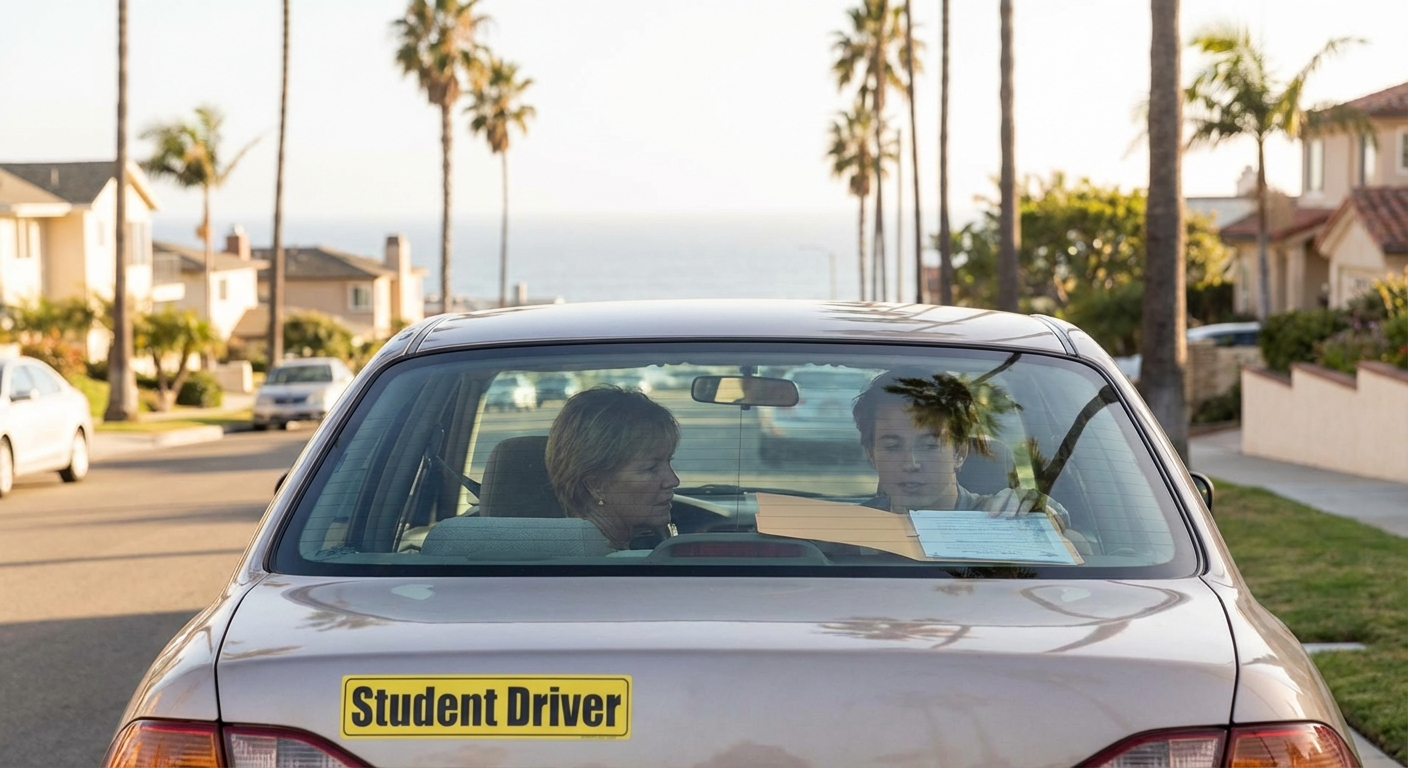
Provisional Licenses and Teen Drivers: A Special Case
California has a Graduated Driver Licensing (GDL) program, meaning teenagers get a provisional license first. This comes with restrictions:
* For the first 12 months, you can’t drive between 11 PM and 5 AM.
* Also, for the first 12 months, you can’t transport passengers under 20 years old unless a licensed driver 25 or older is present.
These restrictions, while designed for safety, don’t necessarily lower insurance rates. Insurers still see the driver as “new” and “young.” However, maintaining a completely clean record during this provisional period is absolutely critical. Any tickets or accidents will only make future insurance even more expensive.
Getting Coverage: On Your Own or Under a Parent’s Policy?
This is a common question, and it often sparks a lot of discussion in families.
For most teen drivers, the easiest and often most cost-effective path is to be added to a parent’s existing policy. Why? Because the parent’s policy usually benefits from years of driving history, good credit (though CA doesn’t use credit scores for *auto* rates, it can be a factor in *other* insurance lines which might indirectly affect overall customer profile), and bundling discounts. The premium will definitely go up when a new, young driver is added – sometimes significantly – but it’s usually less than what a teen would pay for their own policy.
But wait — what if you’re an adult getting your first license, or you’ve just moved to California and need your own policy? Then you’re looking at starting fresh. This is where shopping around becomes less of a chore and more of a necessity. Some companies are simply more friendly to new drivers than others.
Ways New Drivers Can Try to Save Money
It’s not all doom and gloom. While new drivers face higher rates, there are definitely steps you can take to soften the blow.
1. **Take a Driver Education Course:** Many insurers offer discounts for completing approved driver’s education programs. It shows you’re serious about safety.
2. **Maintain Good Grades:** If you’re a student, a “Good Student Discount” can often shave a few bucks off your premium. Insurers believe responsible students are often responsible drivers.
3. **Choose Your Car Wisely:** Opt for a vehicle that’s known for its safety and affordability to repair. Think older models, sedans, cars with good safety ratings. Avoid high-performance vehicles.
4. **Consider Telematics Programs:** Some insurers offer programs where they track your driving habits (speed, braking, mileage) via an app or device. Drive safely, and you could earn discounts. It’s not for everyone, but it can work.
5. **Shop Around – And Get Good Advice:** This is probably the most important step. Don’t just get one quote. Talk to an independent agent. They work with multiple insurance companies like State Farm, AAA, Farmers, and many others, and can compare rates and coverage options for you. They understand the nuances of California’s market, including consumer protections like Prop 103, which helps ensure rates are fair and justified.
It’s easy to feel overwhelmed by all this, especially when you’re just starting out. You might even feel a bit frustrated by the cost. But remember, insurance isn’t just a legal requirement; it’s a financial safety net. A good agent can help you understand the risks and find a policy that protects you without breaking the bank.
Ready to explore your options and get some real answers? You can start by getting a personalized quote right now.
Get Your California Car Insurance Quote Here
Frequently Asked Questions About New Driver Insurance in California
Can I get car insurance in California without a driver’s license?
No, generally you can’t get a standard car insurance policy without a valid California driver’s license. The insurance company needs to know who the primary driver is and verify their driving record. If you’re in the process of getting your license, you’ll need to wait until it’s issued.
How long does it take for my insurance rates to go down as a new driver?
It varies, but generally, you’ll start to see significant decreases in your premium after you’ve had a clean driving record for three to five years. Being over 25 also helps, as insurers statistically see older drivers as less risky. Every year of incident-free driving helps build that positive history.
Do I need full coverage insurance as a new driver?
California law only requires liability coverage. However, if you have a car loan or lease, your lender will almost certainly require you to carry full coverage (collision and comprehensive). Even if you own your car outright, full coverage protects your investment from damage, theft, or natural events like a tree falling on it. It’s usually a smart idea, despite the higher cost.
What happens if I get a ticket or have an accident as a new driver?
Any ticket or at-fault accident will almost certainly cause your insurance rates to increase. As a new driver, your rates are already high, so an incident on your record can have a more pronounced impact. It’s really important to drive carefully and defensively from day one.
Is it true that California doesn’t use credit scores for car insurance?
Yes, that’s correct. Thanks to Proposition 103, California is one of the few states that prohibits insurers from using credit scores to determine your auto insurance premiums. Insurers can only consider factors directly related to your driving risk, like your driving record, years of driving experience, mileage, and where you live.
Finding the right coverage doesn’t have to be a confusing, frustrating process. Karl Susman and the team at California Car Insurance Pros (CA License #OB75129) have been helping California drivers navigate these waters for years. We understand the unique challenges new drivers face and can help you find a policy that fits your needs and budget. Give us a call at (877) 411-5200 or click below to get started.
Get Your California Car Insurance Quote Here
This article is for informational purposes only and does not constitute financial advice.