The Accident on the 5 Freeway: A California Family’s Wake-Up Call
Picture this: It’s a Tuesday afternoon, peak traffic on the I-5 near San Clemente. The Miller family—Sarah, Tom, and their two kids, Leo and Mia—are heading home to Orange County after a quick beach trip. Suddenly, brakes squeal. A distracted driver, fiddling with their phone, rear-ends them. Not a major crash, thankfully, but enough to jolt everyone. Mia, in the back seat, bangs her knee. Leo’s head snaps forward. Sarah’s neck feels a little stiff.
First thought? Everyone’s okay, mostly. Second thought? Oh, the insurance headache. Who pays for Mia’s urgent care visit? What about Sarah’s chiropractor if that neck stiffness doesn’t go away? This kind of scenario plays out thousands of times a day on California roads, from the crowded 101 in Ventura County to the sprawling freeways of the Inland Empire. You don’t just need coverage for your car; you need it for your body.
Many people, especially those who’ve lived in other states, think about “Personal Injury Protection” or PIP in moments like these. But here’s the thing: California doesn’t have traditional PIP. That’s a big surprise for a lot of folks. Our state handles accident injuries a bit differently. Instead of a no-fault system where your own insurance pays your medical bills regardless of who was at fault, California operates under a “fault” system. Which brings up something most people miss: Understanding what *does* protect you here is absolutely essential.
California’s Answer to PIP: MedPay and UMBI
So, if there’s no PIP, what options do California drivers have for their own injuries after a crash? We mainly rely on two key coverages: Medical Payments (often called MedPay) and Uninsured/Underinsured Motorist Bodily Injury (UMBI). These aren’t just obscure add-ons. Honestly, they’re foundational for protecting yourself and your family in a state with some of the busiest roads and, unfortunately, a fair share of uninsured drivers.
Think of MedPay as your immediate first aid kit, while UMBI is your safety net for when the other guy drops the ball entirely. They work together, but they serve distinct purposes. Let’s break them down.

Medical Payments (MedPay): Immediate Relief, No Questions Asked
The Millers’ immediate concern was Mia’s knee and Leo’s bump on the head. They didn’t want to wait for the police report, or for the other driver’s insurance company to confirm fault. They just needed care, fast. That’s exactly where MedPay shines.
Medical Payments coverage is pretty straightforward. It pays for reasonable medical expenses for you and anyone else in your vehicle, regardless of who caused the accident. This includes ambulance rides, emergency room visits, doctor appointments, X-rays, even dental work if your teeth get chipped. It doesn’t matter if you were at fault, or the other driver was, or if a rogue squirrel caused a swerve. Your MedPay kicks in.
How fast? Usually very quickly. This coverage is designed to pay out promptly, without the lengthy investigation often required for liability claims. Imagine your health insurance has a high deductible, say $5,000. That urgent care visit for Mia might only be a few hundred dollars. If you have MedPay with a $5,000 limit, it can cover that bill, keeping your health insurance deductible untouched. Many people overlook MedPay, thinking their health insurance will cover everything. But MedPay can cover those immediate out-of-pocket costs – deductibles, co-pays – that health insurance might leave you with.
Typical MedPay limits range from $1,000 to $10,000, sometimes even higher. For many, even a small amount of MedPay can be a huge relief in the immediate aftermath of a minor accident. It’s not meant to cover catastrophic injuries over the long term, but it’s invaluable for those initial bills.
Uninsured/Underinsured Motorist Bodily Injury (UMBI): When the Other Driver Fails You
Now, let’s think about a different scenario for the Millers. What if the distracted driver who rear-ended them had no insurance? Or worse, had only the absolute minimum required by California law – which, at $15,000 per person/$30,000 per accident for bodily injury, isn’t much. If Sarah needed extensive physical therapy for her neck, that $15,000 would disappear fast.
This is where Uninsured/Underinsured Motorist Bodily Injury (UMBI) coverage becomes your champion. It’s designed to protect you and your passengers when the at-fault driver either has *no* insurance (uninsured) or *not enough* insurance (underinsured) to cover your medical bills, lost wages, and pain and suffering.
California has a significant percentage of uninsured drivers. While exact numbers fluctuate, industry sources often point to figures around 15-20% of drivers on the road. Drive through the crowded streets of Los Angeles, across the bridges in the Bay Area, or along the freeways in the Central Valley, and you’re statistically likely to encounter someone without proper coverage. UMBI protects you from their irresponsibility.
How does it work? If an uninsured driver injures you, your UMBI coverage steps in as if it were *their* liability insurance. It covers your medical expenses, lost income if you can’t work, and even compensation for pain and suffering. If an underinsured driver hits you, and their limits are exhausted, your UMBI can cover the difference up to your own policy limits. This isn’t just about covering bills; it’s about making you whole, just as if you had hit someone with good insurance.
The Millers, having UMBI, would have found themselves in a much better position if the other driver was uninsured. Sarah’s potential physical therapy, Tom’s lost days from work, even the kids’ follow-up visits – all could be covered. It’s not a luxury; it’s a necessity in a state where too many drivers play fast and loose with the rules.
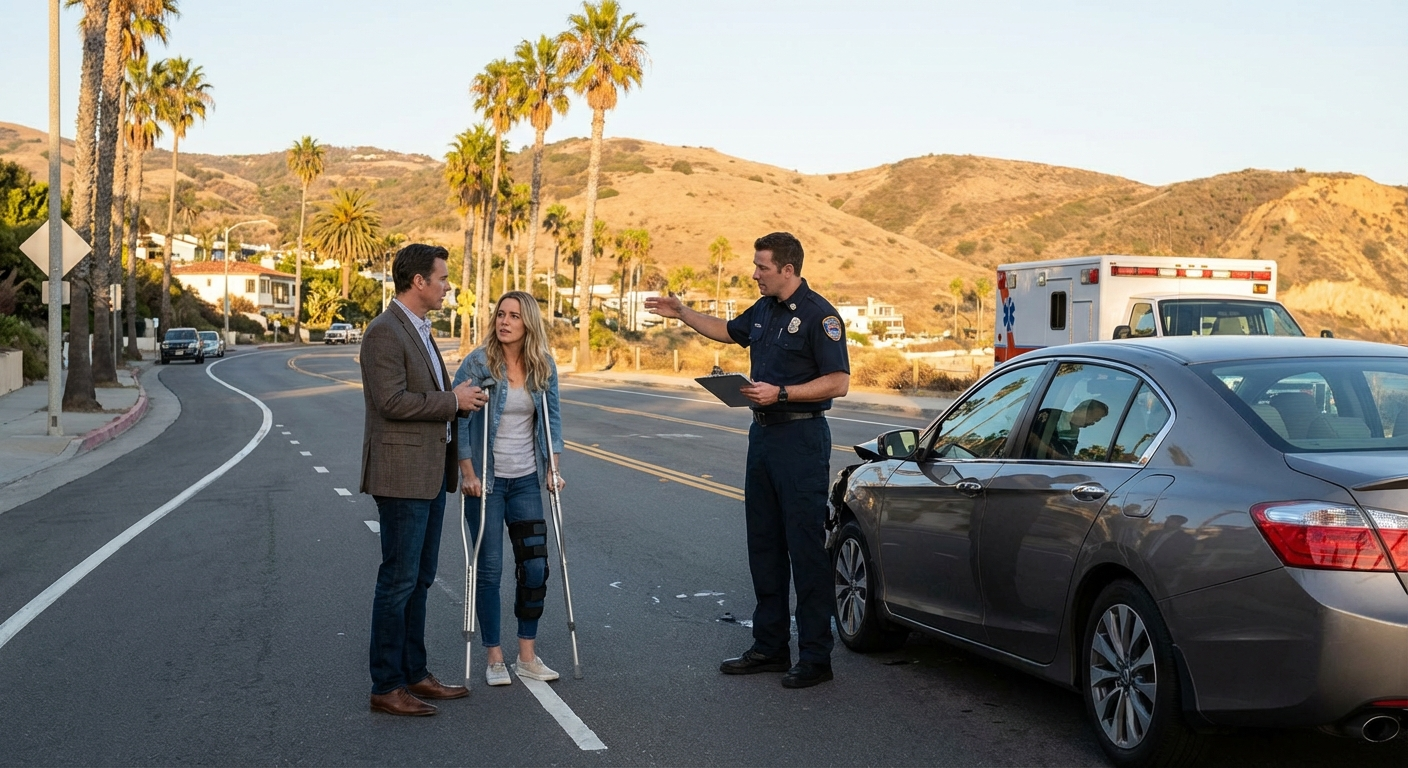
California’s Fault System: Why It Matters for Your Injuries
California is what’s known as a “fault” or “tort” state. This means that after an accident, the person who caused it (or their insurance company) is responsible for paying for the damages, including injuries. This sounds simple enough, right? The short answer is yes. The real answer is more complicated.
Determining fault can take time. Sometimes it’s clear, like our Miller family’s rear-end collision. Other times, it’s a messy “he-said, she-said” situation at a busy intersection in San Jose. If you’re injured, you might have to wait for the insurance companies to sort out who’s to blame before you see any significant payment for your medical bills from the other party’s insurer. That’s where MedPay becomes incredibly useful – it bridges that gap by paying your immediate medical costs regardless of fault, getting you care when you need it most.
There’s also California’s “pure comparative negligence” rule. What does that mean? If you’re found partly at fault for an accident, your recovery for damages will be reduced by your percentage of fault. Say you were 20% at fault for that fender bender because your brake lights weren’t working perfectly, even though the other driver was 80% at fault for being distracted. Your compensation for injuries could be reduced by 20%. This system can make getting full compensation tricky, reinforcing why your own MedPay and UMBI are so important.
Other Important Coverages That Help After an Injury
While MedPay and UMBI are your direct injury protectors in lieu of PIP, other parts of your auto insurance and even your health insurance play a supporting role.
Your **health insurance** is, of course, a major player. After an auto accident, your health insurance often becomes the primary payer for your medical treatment. This is good, especially for serious injuries. But as we discussed, MedPay can cover those pesky deductibles and co-pays, making sure you don’t face huge out-of-pocket costs before your health insurance even kicks in. It’s a common misconception that if you have health insurance, you don’t need MedPay. Not always. Big difference.
Then there’s your **Bodily Injury Liability** coverage. This isn’t for *your* injuries; it’s what protects you if *you* cause injuries to someone else. It pays for their medical bills, lost wages, and pain and suffering up to your policy limits. While it doesn’t help the Millers directly with their own injuries, having adequate liability coverage is a moral and financial imperative. You don’t want to be the uninsured driver on the 5 Freeway that causes someone else a nightmare.
Why This All Matters for California Drivers
The Millers eventually recovered. Mia’s knee healed, Leo was fine, and Sarah’s neck stiffness faded after a few chiropractic visits. Their MedPay took care of those immediate bills, meaning they weren’t stressing about co-pays while also dealing with the emotional aftermath of the crash. If the other driver had been uninsured, their UMBI would have been the real MVP, ensuring their recovery wasn’t derailed by someone else’s lack of responsibility.
Driving in California isn’t just a commute; it’s an experience. From the winding roads of Malibu to the congested arteries of downtown San Diego, our state presents unique challenges. Accidents happen. Distracted driving is a real problem. High traffic density means even minor incidents can quickly escalate into significant medical bills. Protecting yourself and your loved ones isn’t just about covering your car; it’s about safeguarding your health and financial future.
Knowing your options, understanding the nuances of California’s fault system, and making informed choices about coverages like MedPay and UMBI can provide immense peace of mind. It’s about being prepared for the unpredictable nature of the road.
Ready to make sure your coverage truly protects you and your family? Don’t leave it to chance. Connect with Karl Susman and his team at California Car Insurance Pros. For decades, Karl (CA License #OB75129) has been helping Californians understand their options and get the right protection. You can start the conversation and get a personalized quote right here: https://susmaninsurance.com/get-a-quote/
Frequently Asked Questions About Auto Accident Injuries in California
Is Personal Injury Protection (PIP) required in California?
No, California is a “fault” state, not a “no-fault” state. This means we don’t have traditional Personal Injury Protection (PIP) coverage like some other states. Instead, California drivers rely on Medical Payments (MedPay) and Uninsured/Underinsured Motorist Bodily Injury (UMBI) coverage to protect themselves and their passengers after an accident.
What’s the main difference between MedPay and UMBI?
MedPay covers medical expenses for you and your passengers, regardless of who was at fault for the accident. It pays quickly and directly for things like ambulance rides, urgent care, and doctor visits. UMBI, on the other hand, protects you if the at-fault driver has no insurance or not enough insurance to cover your injuries, lost wages, and pain and suffering. UMBI essentially steps in to act as the other driver’s liability coverage when they don’t have it.
How much MedPay should I get?
The amount of MedPay you need really depends on your personal situation, especially your health insurance deductible and overall financial picture. Common limits range from $1,000 to $10,000. If you have a high-deductible health insurance plan, getting a higher MedPay limit can be a smart move, as it can cover those immediate out-of-pocket costs before your health insurance kicks in.
Does my health insurance cover car accident injuries?
Yes, typically your health insurance will cover medical treatment for injuries sustained in a car accident. However, your health insurance usually won’t cover things like lost wages or pain and suffering. Also, you’ll still be responsible for your health insurance’s deductibles, co-pays, and co-insurance. This is where MedPay can be incredibly useful, bridging the gap by covering those immediate costs.
Understanding these nuances can save you a lot of headache and heartache after an accident. To explore your options and get expert advice tailored to your California driving life, visit https://susmaninsurance.com/get-a-quote/ today. Karl Susman, California Car Insurance Pros, CA License #OB75129, is ready to help you at (877) 411-5200.
This article is for informational purposes only and does not constitute financial advice.