Your California Dream Car Needs California Coverage
There’s something truly special about a classic car. Maybe it’s the roar of the engine, the gleam of chrome, or the way it takes you back to simpler times. Here in California, where the sun shines bright and the roads beg for a cruise, owning a vintage beauty isn’t just a hobby; it’s a lifestyle. You’ll find them everywhere, from the winding roads of Malibu to the historic streets of Old Town Sacramento, even rumbling through the vineyards of Sonoma. But here’s the thing: insuring that cherished ride isn’t quite like getting coverage for your daily commuter.
Honestly, it’s a common mistake. Many owners just add their ’67 Mustang or ’59 Impala to their regular auto policy, thinking they’re all set. The short answer is yes, you *can* do that. The real answer is more complicated, and it could leave you seriously disappointed if something goes wrong.
Why Regular Car Insurance Just Doesn’t Cut It
Think about your everyday car, say, a 2018 Honda Civic. If it gets totaled, your standard policy pays out its “actual cash value.” That means they look at what a similar Civic, with similar mileage and wear, would sell for *today*. They factor in depreciation, the big enemy of most modern cars.
But here’s where it gets interesting. Depreciation is precisely what you *don’t* want applied to your classic. A vintage Corvette doesn’t lose value; it often gains it. Its worth is tied to its condition, its rarity, its history – not just its age. If you’ve ever tried to replace a specific part for a 1930s Ford, you know it’s not like ordering something off Amazon. The costs are higher, the parts are harder to find, and the labor requires specialized skills.
So, if your classic, valued at $75,000, gets into a fender bender in, say, the Inland Empire, and your regular policy decides its “actual cash value” is only $30,000 because it’s old, you’re out a significant chunk of change. Big difference.
The Magic of “Agreed Value”
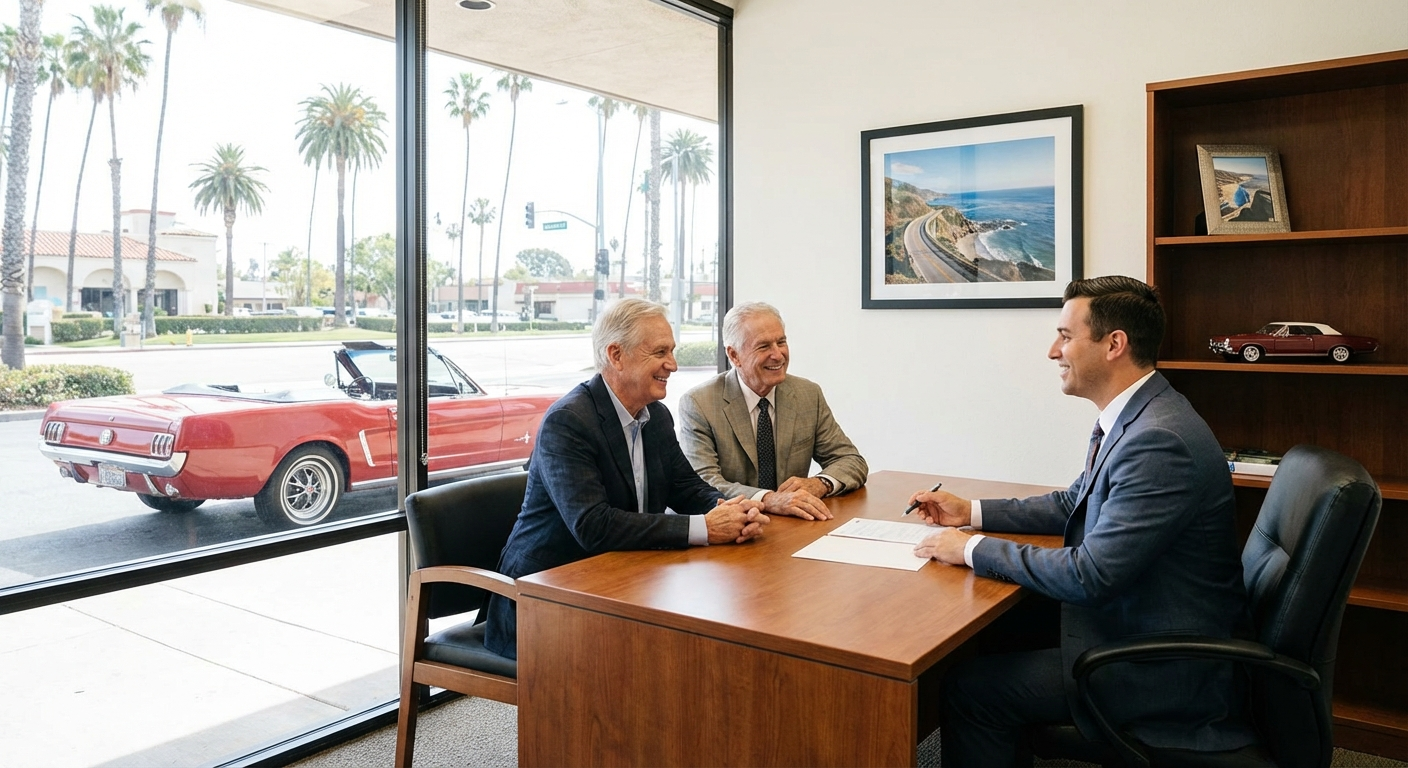
This is the cornerstone of classic car insurance. Instead of actual cash value, you and the insurance company agree on a specific value for your car *before* the policy even starts. That $75,000 Corvette? You get it in writing. If it’s a total loss, that’s the amount you get paid. Period.
It’s a huge peace of mind, especially when you’ve poured countless hours and dollars into restoring it. Imagine you’ve spent years bringing a rusted shell back to life in your garage in Ventura County, every nut and bolt a labor of love. You’ve installed a new engine, custom paint, period-correct interior. You’ve got receipts for everything. With an agreed value policy, that investment is protected.
This isn’t just for show cars, either. Maybe you have a vintage pickup you use for weekend trips to the local farmers market, or an old muscle car you take to cruise nights in the Valley. As long as it’s not your primary daily driver, it likely qualifies.
What Makes a Car “Classic” for Insurance?
The definition can vary a bit between insurers, but generally, a classic car is:
* **Age:** Usually 25 years or older. Some companies consider “vintage” cars (pre-1940s) and “antique” cars (pre-1970s) separately, but “classic” is a good umbrella term.
* **Usage:** Not your daily commuter. Most classic policies come with mileage restrictions – often 2,500 to 5,000 miles a year. This isn’t meant to stop you from enjoying your car, but to ensure it’s not being subjected to the wear and tear of everyday traffic on the 405.
* **Condition:** Generally well-maintained or under restoration. A beat-up old clunker sitting in a field probably won’t qualify for specialized classic car coverage.
* **Storage:** Usually stored in a secure, enclosed garage. This helps protect against theft and damage, especially in areas prone to break-ins.
Some companies even offer coverage for newer “future classics” or “exotics” that might not be 25 years old but are appreciating in value.
Beyond Agreed Value: Other Perks of Classic Car Policies
The agreed value is fantastic, but these specialized policies offer more than just that.
* **Specialized Roadside Assistance:** This isn’t your average tow truck service. We’re talking flatbed towing, which is essential to protect the delicate underside and low clearance of many classics. Nobody wants their vintage ride dragged by a chain.
* **Parts Coverage:** Some policies include coverage for spare parts you might have stored for future repairs or restorations.
* **Restoration Coverage:** If your car is actively being restored, you can get coverage that increases as the value of the vehicle grows with each completed stage. This is a lifesaver for those long-term projects.
* **No Deductible Options:** While not always available or the cheapest option, some policies allow you to choose a zero deductible for certain types of claims.
* **Inflation Guard:** In a market where classic car values can climb, some policies offer a small percentage increase in your agreed value each year without you having to re-appraise the car. It’s a smart way to keep up.
The California Climate and Your Classic
California’s weather is a blessing and a curse for classics. Our mostly dry climate means less rust than, say, the Midwest. That’s a huge plus. But the intense sun in places like Palm Springs or the Central Valley can wreak havoc on paint, interiors, and tires if not properly protected. And let’s not forget the occasional, but increasingly severe, wildfires. While classic cars are typically garaged, the threat of fire, like the devastating 2025 LA fires scenario, is a real concern for everyone here.
This is why proper storage and a solid classic car policy are so important. It’s not just about accidents; it’s about protecting your investment from everything our beautiful, sometimes wild, state can throw at it.
Finding the Right Fit in a Changing Market
The California insurance market has been… interesting lately. Prop 103, which dictates how rates are set, combined with the increasing costs of wildfires and other natural disasters, means many insurers like State Farm, AAA, and Farmers have been adjusting their offerings. Sometimes, they’re even pulling back from certain areas or types of coverage.
This makes working with an independent expert even more valuable. Someone who knows the local market, understands the subtle differences between policies, and can find you the best fit among the various carriers. You don’t want to spend hours calling company after company, explaining your unique ’70 Barracuda.
That’s where Karl Susman and California Car Insurance Pros come in. With CA License #OB75129, Karl has been helping Californians protect their prized possessions for years. He understands the nuances of classic car coverage and can help you navigate the options. It’s about getting tailored advice, not just a generic quote.
Is Classic Car Insurance Cheaper?
Often, yes! Because classic cars are driven less, stored securely, and their owners tend to be more careful, they’re generally considered lower risk. This often translates to lower premiums compared to insuring a daily driver for the same agreed value. But remember, “cheaper” doesn’t mean “less coverage.” It simply reflects the different risk profile.
Thinking about that vintage Porsche sitting in your garage? Don’t leave its future to chance. Protecting your investment means getting the right coverage.
Ready to explore options for your classic car? You can start the conversation and get a personalized quote by visiting us at https://californiacarinsurancepros.com/quote/.
What About Cars Under Restoration?
This is a fantastic question and one that often causes confusion. If you’ve got a project car that’s currently a pile of parts or a half-finished body, a standard classic car policy might not be the right fit just yet. However, many specialized insurers offer “restoration insurance.” This type of policy can cover the vehicle for its current parts value and then increase its insured value as you add more components and labor. It protects against theft of parts, damage during the restoration process, and other risks unique to a car that’s not yet roadworthy. Make sure to discuss your restoration plans with your agent.
Common Questions About Classic Car Insurance
1. Can I drive my classic car to work sometimes?
Generally, classic car policies are for pleasure use only. This means weekend cruises, car shows, club events, and occasional drives. Commuting to work usually falls outside these guidelines. Most policies have annual mileage limits (often 2,500 to 5,000 miles) to reflect this limited use. If you need to commute in it, you’d likely need a different type of policy or to discuss specific exceptions with your insurer.
2. What if my car appreciates in value after I insure it?
That’s a good problem to have! With an agreed value policy, the payout is fixed at the agreed amount. If your car’s value increases significantly, you’ll want to contact your agent to reassess the agreed value. Many policies offer an “inflation guard” feature that automatically bumps up the agreed value by a small percentage each year, but for a big jump, a new appraisal might be needed.
3. Do I need an appraisal to get classic car insurance?
Often, yes. For higher-value classics or unique builds, insurers will require a professional appraisal to establish the agreed value. For lower-value classics, clear photos and detailed descriptions of the car’s condition, modifications, and any restoration work might be enough. It really depends on the car and the specific insurance carrier. It’s always best to have documentation ready.
4. Can I get classic car insurance for a motorcycle or truck?
Absolutely! The principles of classic car insurance – agreed value, limited use, specialized roadside assistance – apply equally to vintage motorcycles, classic trucks, and even old military vehicles or fire engines. If it’s a vehicle with appreciating or stable value that’s primarily used for pleasure, there’s likely a specialized policy for it.
5. My car isn’t “perfect.” Can it still get classic coverage?
Yes! Not every classic needs to be a concourse winner. Many policies cover “driver quality” classics – cars that are in good, roadworthy condition but might have some minor imperfections or aren’t fully restored. The key is that the car isn’t a beat-up wreck and is being cared for by its owner. The agreed value would simply reflect its current condition.
Your classic car isn’t just a vehicle; it’s a piece of history, a work of art, a passion project. It deserves protection that understands its unique worth. Don’t let a standard policy undervalue your dream.
For a free, no-obligation discussion about your classic car insurance needs, reach out to Karl Susman at California Car Insurance Pros, CA License #OB75129, or call us directly at (877) 411-5200. You can also get started online right now: https://californiacarinsurancepros.com/quote/.
This article is for informational purposes only and does not constitute financial advice.