The Unseen Danger on California Roads: Why Uninsured Motorist Coverage Isn’t Optional
That sudden screech of tires. The sickening crunch of metal. Your heart pounds. You’re shaken, maybe hurt. And then, the other driver steps out, looking just as dazed, but with a different kind of problem: no insurance. It’s a gut punch, isn’t it? That feeling of utter helplessness, knowing you did everything right – you had your insurance, you followed the rules – but someone else’s negligence, or simply their inability to afford coverage, could leave you with a mountain of medical bills and a wrecked car.
Honestly, it’s a scenario that plays out far too often on California’s busy roads. Maybe you’ve even been there yourself. You’re not alone in feeling frustrated, or even a little scared, about what happens next when the person at fault doesn’t have the means to pay. That’s precisely why understanding something called “uninsured motorist coverage” isn’t just a good idea; it’s practically a necessity for anyone driving in the Golden State. It’s your personal shield against the financial chaos caused by drivers who don’t carry their fair share of responsibility.
That Gut-Wrenching Moment: What Happens When the Other Driver Has Nothing?
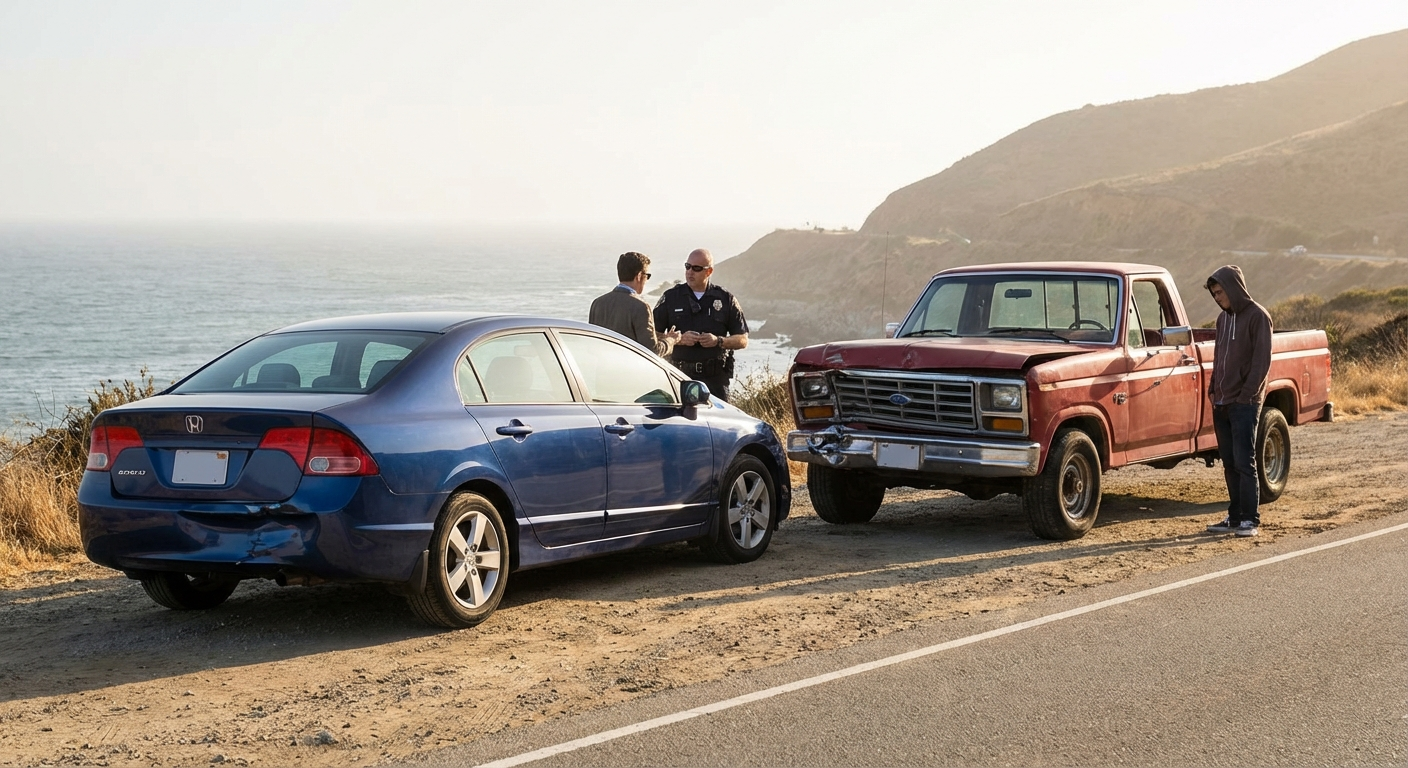
Imagine this: You’re driving home from work, maybe through the bustling streets of Orange County or down a quiet road in the Inland Empire. Suddenly, another car swerves into your lane, causing a collision. Your car is damaged. You’re feeling a sharp pain in your neck. And then the news comes: the other driver, the one who caused all this, has no auto insurance. Zero. What now?
For most people, this is where the real panic sets in. Who pays for your emergency room visit? What about the weeks of physical therapy? Who fixes your car, or replaces it if it’s totaled? Without uninsured motorist coverage, you’d be looking at paying for all of it out of your own pocket. Your health insurance might cover some medical costs, but you’d likely still face deductibles and co-pays. Your collision coverage could fix your car, but you’d pay your deductible, and sometimes, you just don’t have that extra cash lying around. The whole thing feels incredibly unfair.
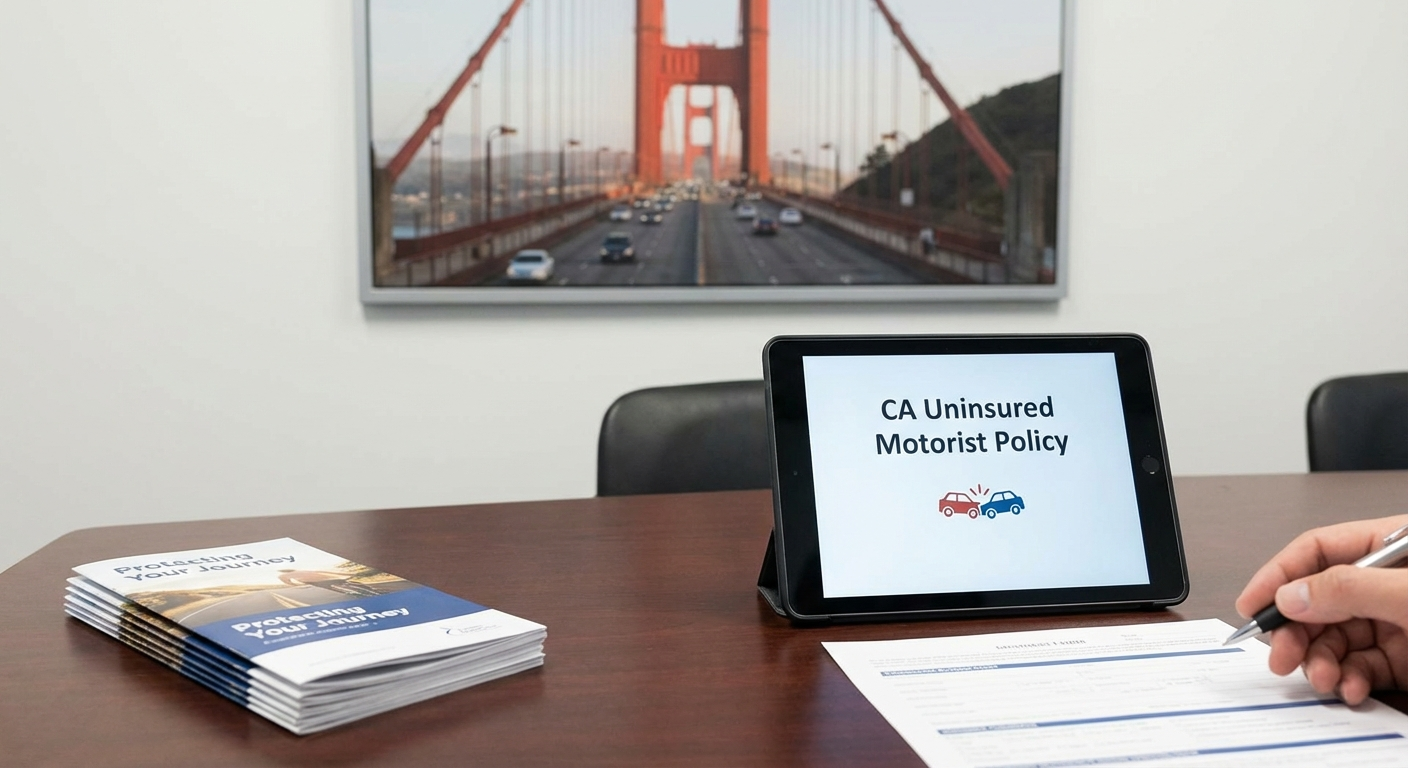
California’s Risky Roads: A Special Case for UM
California is a beautiful state, no doubt. But it’s also a challenging one when it comes to auto insurance. We’ve got millions of drivers on our freeways, from the 405 in Los Angeles to the I-5 stretching through the Valley. With so many cars, comes a higher chance of accidents. And sadly, a higher chance of encountering someone without proper insurance.
Why is California different? Well, for one, insurance premiums have often seen double-digit increases in recent years across California, sometimes jumping 20-30% in a single year for many drivers. These rising costs, fueled by everything from wildfire claims impacting property insurance to increased repair costs and medical expenses, make it harder for some people to afford coverage. When insurance gets expensive, more people choose to drive without it, even though it’s illegal. This creates a vicious cycle.
Which brings up something most people miss. Prop 103, while designed to protect consumers, has also made the insurance market here uniquely complex. Insurers sometimes pull back from certain areas or become very selective, especially after major events like the 2025 LA fires (or any of our recent fire seasons). This can mean fewer options and higher prices for everyone, pushing even more people into the uninsured category. It’s a tough situation for both drivers and insurers.
It’s Not Just About the Other Guy: Your Own Coverage Matters
So, if you’re hit by an uninsured driver, your uninsured motorist coverage steps in to act like *their* insurance, paying for damages they would have been responsible for. But it’s not just one type of coverage; it usually breaks down into two main parts: Uninsured Motorist Bodily Injury (UMBI) and Uninsured Motorist Property Damage (UMPD). Think of them as two separate but equally important shields.
Understanding the Nitty-Gritty: UMBI vs. UMPD
It’s easy to get lost in all the insurance jargon, isn’t it? But understanding these two parts can make a huge difference if you ever need them.
Uninsured Motorist Bodily Injury (UMBI): Protecting You and Your Passengers
This is the big one. If an uninsured driver injures you or anyone in your car – your spouse, your kids, a friend riding along – UMBI pays for those injuries. We’re talking medical bills, hospital stays, doctor visits, surgery, and even things like physical therapy or chiropractic care. It also covers lost wages if your injuries keep you from working. And, importantly, it can cover “pain and suffering,” which accounts for the non-economic impacts of your injuries.
Imagine you’re driving through Ventura County, enjoying the scenery, and someone without insurance runs a stop sign, T-boning your car. You end up with a concussion and a broken arm. Without UMBI, all those medical bills, plus the income you lose while recovering, would fall squarely on your shoulders. With UMBI, your policy steps up to cover those costs, just as if the at-fault driver had their own insurance. It’s a huge relief during a deeply stressful time.
Uninsured Motorist Property Damage (UMPD): Fixing Your Car
This part of the coverage handles the damage to your vehicle. If an uninsured driver totals your beloved sedan, UMPD will pay to repair or replace it. In California, UMPD usually comes with a $3,500 limit. That’s not always enough to cover severe damage, but it’s certainly better than nothing.
But wait — there’s a difference here. If you have collision coverage on your policy, your collision insurance would also pay for the damage to your car, regardless of who was at fault. The upside of UMPD? It often doesn’t have a deductible, or if it does, it’s usually much lower than your collision deductible. So, if your collision deductible is $1,000, but your UMPD has no deductible, you’d save that thousand dollars by using your UMPD for damages up to its limit. For many drivers, that’s a big deal.
The “What Ifs” That Keep You Up at Night: Common Scenarios
Sometimes, the danger isn’t just an uninsured driver. What about a hit-and-run? Someone clips your bumper, speeds off, and you never get their license plate number. In California, your uninsured motorist coverage can kick in here too, treating the unknown driver as uninsured. It’s not just for when you *know* they don’t have insurance; it’s also for when you *can’t find out*.
That’s not the whole story. What if the other driver *does* have insurance, but only the bare minimum required by law? California’s minimum liability limits are pretty low – $15,000 for injury to one person, $30,000 for all injuries per accident, and $5,000 for property damage. If you’re seriously hurt, or your car is expensive to repair, those limits can be exhausted in a flash. That’s where *underinsured motorist coverage* (UIM) comes in. It’s often bundled with UM and covers you when the at-fault driver’s insurance isn’t enough to pay for all your damages. Think of it as an extra layer of protection.
And it’s not just car-on-car accidents. If you’re hit by a car while riding your bicycle, or even as a pedestrian, and the driver is uninsured, your UMBI coverage can still protect you. It’s not limited to when you’re behind the wheel of your own car.
The Cost-Benefit Question: Is It Worth the Extra Premium?
Honestly, nobody likes paying more for insurance. And with premiums rising across California, it’s natural to look for ways to save a few bucks. You might wonder if adding uninsured motorist coverage is just another expense you can cut.
The short answer is yes. The real answer is more complicated. While it does add a bit to your premium, the cost of UM/UIM coverage is usually a fraction of what you’d pay for liability or collision. Yet, the protection it offers can be priceless. Imagine facing tens of thousands of dollars in medical bills, or having to replace a car, all out of your own pocket. That small increase in your premium suddenly looks like an absolute bargain. It’s about protecting your financial future, not just your car.
For many Californians, especially those living in dense areas or commuting on busy freeways, the peace of mind alone is worth it. You can’t control what other drivers do, but you *can* control how well you’re protected. If you’re looking at your options, or feeling overwhelmed by the choices, it really helps to talk to someone who understands the California market inside and out. Someone like Karl Susman at California Car Insurance Pros. He’s seen it all, from the everyday fender benders to the truly catastrophic events. He can walk you through what makes sense for your specific situation.
Ready to explore your options and get some personalized advice? Don’t wait until it’s too late.
Get a California Auto Insurance Quote Today!
Choosing the Right Limits: It’s Not One-Size-Fits-All
Deciding how much UM/UIM coverage to buy can feel a bit like guesswork. Most experts suggest matching your UMBI limits to your liability limits. So, if you carry $100,000/$300,000 in liability, you’d aim for the same for your UMBI. Why? Because if you’re responsible enough to protect others up to that amount, you should protect yourself and your family similarly.
Think about your personal assets, your income, and your health insurance deductible. If you have great health insurance with a low deductible, maybe you can carry slightly lower UMBI. But if your health insurance is minimal, or you have a high deductible, then robust UMBI becomes even more important. It’s a personal calculation, and there’s no single “right” answer for everyone.
Karl Susman and California Car Insurance Pros: Your Guide Through the Maze
Navigating California’s auto insurance market can feel like trying to find your way through a dense fog. With insurers constantly adjusting rates, sometimes pulling out of the state, and the unique challenges we face – from wildfires in wine country to the sheer volume of drivers – having an experienced, empathetic guide makes all the difference.
Karl Susman, with California Car Insurance Pros (CA License #OB75129), has been helping Californians just like you for years. He understands the nuances of the market, the impact of things like FAIR Plan changes, and what it means for people who might be considered “high-risk” or seniors. He doesn’t just sell policies; he listens to your concerns, validates your frustrations, and then works tirelessly to find solutions that truly protect you. He’s the kind of agent who helps you feel less confused and more confident about your coverage choices. You can reach him directly at (877) 411-5200.
Don’t let the fear of the unknown keep you unprotected. Taking a few minutes to get some expert advice could save you from a lifetime of financial worry.
Talk to an expert about your California auto insurance needs.
Frequently Asked Questions About Uninsured Motorist Coverage in California
Does California require uninsured motorist coverage?
No, California law doesn’t *require* you to carry uninsured motorist coverage. However, insurance companies are required to *offer* it to you, and you must formally reject it in writing if you don’t want it. Most experts strongly recommend accepting it due to the high number of uninsured drivers.
What’s the difference between Uninsured Motorist (UM) and Underinsured Motorist (UIM)?
Uninsured Motorist (UM) coverage protects you when the at-fault driver has *no* insurance at all. Underinsured Motorist (UIM) coverage kicks in when the at-fault driver *does* have insurance, but their policy limits aren’t high enough to cover all your medical expenses or property damage. They often come bundled together.
What are the typical limits for UMPD in California?
In California, the Uninsured Motorist Property Damage (UMPD) option typically has a limit of $3,500. It’s important to remember that this covers damage to your vehicle only, not bodily injuries.
Does UM/UIM cover hit-and-run accidents?
Yes, generally, your uninsured motorist coverage in California will cover you in a hit-and-run accident where the at-fault driver cannot be identified. The hit-and-run driver is treated as an uninsured motorist.
Will my rates go up if I use my UM/UIM coverage?
Using your uninsured motorist coverage for an accident where you are not at fault generally should not cause your rates to increase. Insurance companies typically only raise premiums for claims where you are determined to be at fault.
—
This article is for informational purposes only and does not constitute financial advice.