Collision Coverage: When Your Car Meets Something Else
Honestly, most drivers think about collision coverage first. It’s the one that comes to mind when you picture a fender bender. You hit another car. You back into a pole. Maybe you swerve to miss a squirrel and clip a mailbox. All those scenarios? That’s collision coverage at work.
It pays to repair or replace your own vehicle if it’s damaged in an accident with another car or object. Doesn’t matter if it’s your fault or not. If someone else is at fault, their liability insurance *should* pay for your car. But what if they don’t have enough insurance? Or what if it takes forever for their company to pay out? That’s when your collision coverage steps in. It gets your car fixed, and then your insurer tries to get their money back from the other driver’s company. This is called subrogation, and it can take a while.
You pick a deductible for this coverage. Say you choose a $1,000 deductible. If your car needs $5,000 in repairs after you hit a guardrail on Highway 101, you’d pay the first thousand, and your insurance company would cover the remaining four thousand. Higher deductibles mean lower monthly premiums, but you’ll pay more out-of-pocket if you need to file a claim. It’s a trade-off.
Comprehensive Coverage: For Everything Else
Now, comprehensive coverage is a different animal. It covers damage to your car that isn’t caused by a collision with another vehicle or object. Think of it as “other than collision” coverage.
What sorts of things fall under this umbrella? Plenty. Theft, for one. If your car gets stolen from your driveway in the Inland Empire, comprehensive coverage helps replace it. Vandalism, too. Someone keys your car in a parking lot, or breaks a window? That’s comprehensive.
But wait — there’s more. Falling objects, like a tree branch hitting your windshield during a windstorm in Ventura County. Fire damage, which is a big deal in California. We’ve seen fires rip through neighborhoods, destroying everything in their path. If your car is caught in a wildfire, your comprehensive coverage is what you’d lean on. Animal strikes are also covered here. Hit a deer on a rural road? Yep, comprehensive. Even hail damage, though less common in our sunny state, falls into this category.
Like collision, comprehensive coverage also has a deductible. You might choose a $500 deductible for comprehensive and a $1,000 for collision. Or maybe both are $500. It’s up to you and what you’re comfortable paying if something happens.
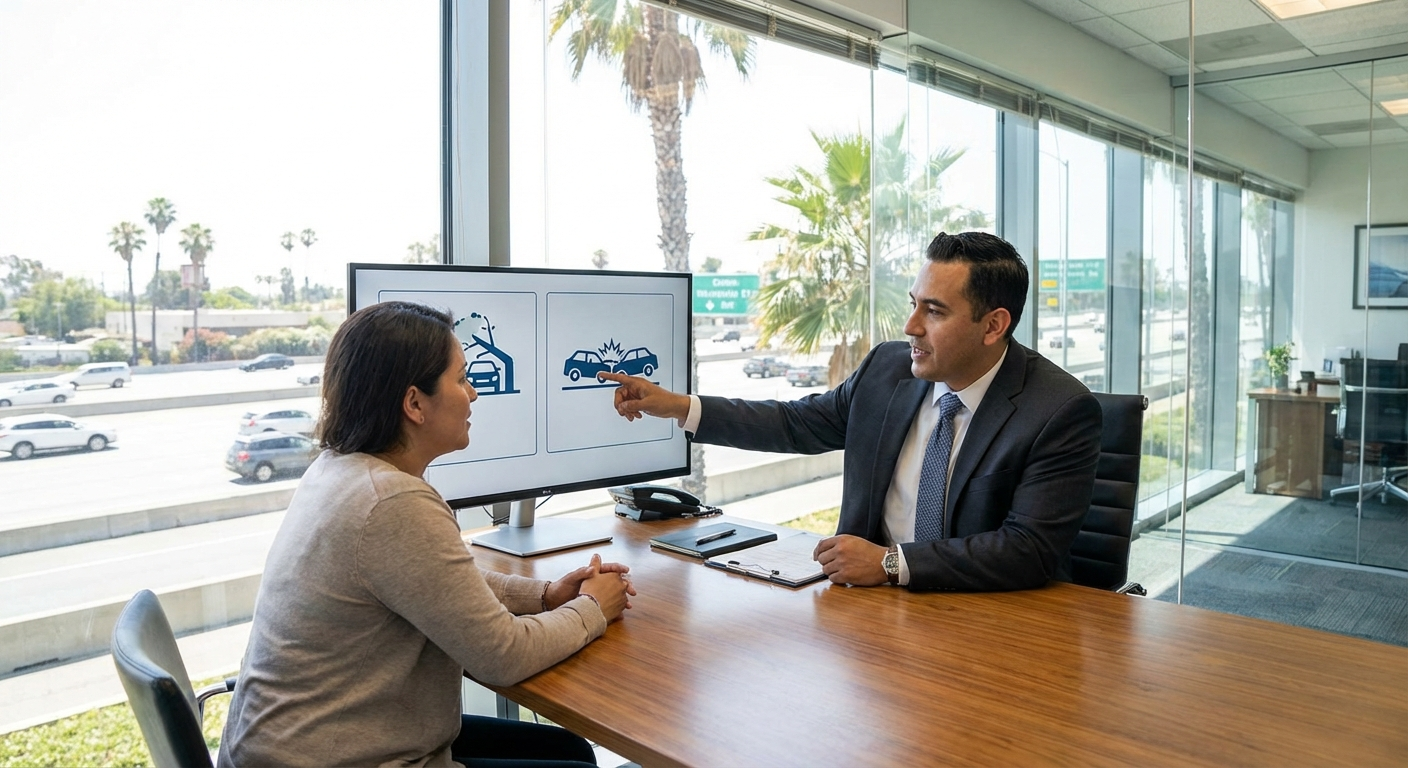
Why the Confusion? They Both Fix Your Car, Right?
It’s easy to mix these two up. Both protect your vehicle. Both pay for repairs or replacement. But their triggers are completely different.
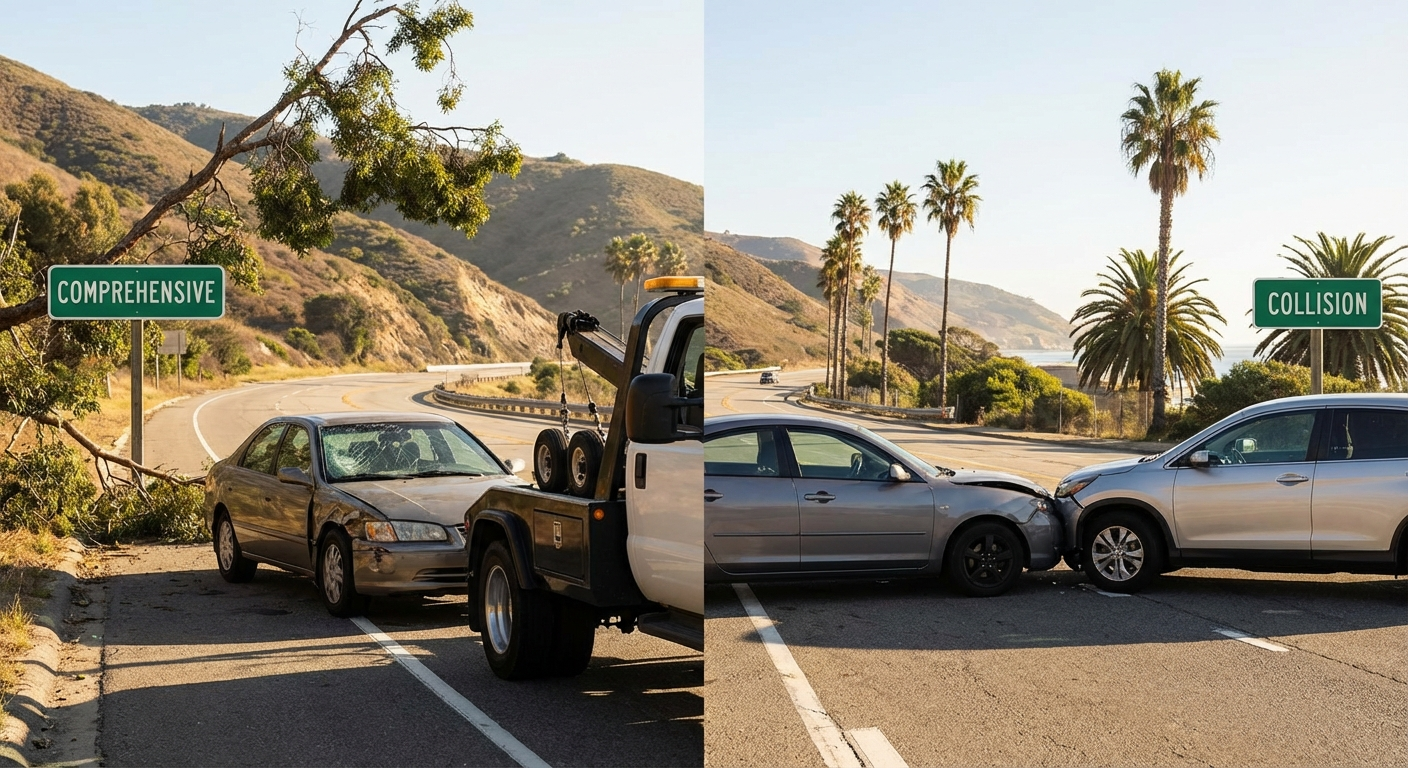
Collision is about impact with another physical thing – car, tree, fence, lamp post. Comprehensive is about everything else – nature, theft, vandalism.
Here’s an example: You’re driving down a street in the Valley. A tree falls on your car during a sudden gust of wind. That’s comprehensive. But if you swerve to avoid that falling tree and hit a parked car, that’s collision. Big difference.
Another one: Your car is parked, and someone breaks a window to steal your laptop. That’s comprehensive. If you back out of your driveway and hit your own garage door, that’s collision. See? The “how” matters a lot.
Do You Really Need Both?
For most people, especially if you have a car loan or lease, the answer is a resounding yes. Lenders require both collision and comprehensive coverage to protect their investment. They want to make sure their asset – your car – is protected from pretty much anything that could happen to it.
But what if you own your car outright? And it’s an older model? Say, a 2008 Honda Civic with 150,000 miles. The actual cash value (ACV) of that car might only be a few thousand dollars. If your collision and comprehensive premiums add up to, say, $800 a year, and you have a $500 deductible on each, you’re paying a lot to protect a car that isn’t worth much more than your annual premium after a few years.
This is where it gets interesting. For an older, paid-off car, some folks choose to drop one or both of these coverages. They’d rather save the premium money and, if something happens, pay for repairs out-of-pocket or just replace the car entirely. It’s a calculated risk. You’re betting that the cost of potential damage or theft won’t exceed the premiums you’d pay over time. Not always a winning bet, but it’s a personal choice.
The California Factor: Why Location and Events Matter
California isn’t just a place; it’s a whole vibe. And that vibe includes some unique insurance considerations.
Think about our wildfire risk. Every year, we see devastating fires. From the hills of Malibu to the canyons of Orange County, the threat is real. If your car is damaged or destroyed by fire, that’s a comprehensive claim. The sheer volume of these claims can sometimes influence how insurers view the risk in certain zip codes.
Then there’s theft. While overall theft rates might fluctuate, specific areas, like parts of Los Angeles or the Bay Area, still see high numbers of stolen vehicles or parts. If you live or regularly park in one of these areas, comprehensive coverage isn’t just nice to have; it’s almost essential.
Here’s where it gets interesting. Prop 103, passed way back in 1988, regulates how insurance rates are set in California. It means insurers can’t just hike rates whenever they want. They have to get approval from the Department of Insurance. This can make the California insurance market a bit different from other states, sometimes leading to fewer choices or more conservative underwriting from insurers like State Farm or Farmers. It affects everything, including the cost and availability of collision and comprehensive coverage.
Choosing Your Deductibles: A Balancing Act
Your deductible choice isn’t just a random number. It’s a strategic decision.
A lower deductible — say, $250 or $500 — means your insurance company pays more if you have a claim. This also means you pay a higher premium each month. For someone who doesn’t have a big emergency fund, a lower deductible can be a lifesaver. You won’t be stuck with a huge repair bill if your car is damaged.
On the flip side, a higher deductible — like $1,000 or even $2,500 — means you pay less each month for your premium. But if you have an incident, you’re on the hook for that larger initial amount. This option usually makes sense for drivers with a solid emergency fund who can comfortably cover a larger out-of-pocket expense. It’s also a good choice if you rarely file claims.
Which brings up something most people miss. Sometimes, filing a small claim isn’t worth it. If your deductible is $1,000 and the damage to your car is only $1,200, is it really worth filing a claim for $200? Probably not. A claim, even a small one, can sometimes impact your future rates. It’s a judgment call.
Getting the Right Advice
Choosing the right mix of collision and comprehensive coverage, and the right deductibles, isn’t always straightforward. It depends on your car’s value, your budget, where you live, and your personal risk tolerance.
This is where an independent agent like Karl Susman comes in. He and his team at California Car Insurance Pros (CA License #OB75129) work with multiple insurers. They don’t just sell you a policy; they help you understand your options and find the best fit for your specific needs in California. They know the ins and outs of the market, which insurers are offering what, and how to navigate the sometimes-tricky waters of California auto insurance.
You can talk through your options, get answers to your questions, and make an informed decision that protects your vehicle without breaking the bank. Don’t just guess. Get expert advice.
If you’re wondering how these coverages fit into your current policy or if you’re getting the best rates, it’s worth a conversation. You can get a personalized quote and see your options right here: https://californiacarinsurancepros.com/quote/
Frequently Asked Questions About Car Insurance in California
Does my car loan require collision and comprehensive?
Almost always, yes. If you have a car loan or lease, your lender will require you to carry both collision and comprehensive coverage. This protects their financial interest in the vehicle. They want to make sure that if the car is damaged or stolen, it can be repaired or replaced.
What if I hit an animal? Is that collision or comprehensive?
Hitting an animal, like a deer or a coyote, is typically covered under your comprehensive insurance. It’s considered an “other than collision” event because it’s not a collision with another vehicle or a stationary object that’s part of the road infrastructure.
Will my rates go up if I file a comprehensive claim?
Not necessarily. While any claim can potentially affect your rates, comprehensive claims are often viewed differently than collision claims. A collision claim where you’re at fault is more likely to increase your premium. Comprehensive claims, like those for theft, vandalism, or natural disasters, are often considered “not-at-fault” incidents and may have less impact on your rates. But it really depends on your insurer and your claims history.
Can I drop collision but keep comprehensive?
Yes, you can. Many people with older, paid-off cars choose to do this. They might decide that the cost of collision coverage isn’t worth it for a car with low actual cash value, but they still want protection against theft, fire, or vandalism.
Does comprehensive coverage cover earthquakes in California?
Typically, no. Standard comprehensive coverage usually excludes earthquake damage. For earthquake coverage, you’d generally need to purchase a separate endorsement or policy. It’s a specific risk that most standard auto policies don’t automatically include.
Ready to explore your options or get a quote tailored to your California driving habits? Karl Susman and his team are ready to help. Visit us for a personalized quote: https://californiacarinsurancepros.com/quote/
***
This article is for informational purposes only and does not constitute financial advice.