Roadside Assistance in California: What Your Auto Insurance Really Covers (and What it Doesn’t)
California’s roads are a mixed bag. One minute, you’re cruising down the Pacific Coast Highway, wind in your hair. The next, you’re stuck in bumper-to-bumper traffic on the 405, or worse, stranded on the shoulder of the 5 Freeway somewhere near Coalinga. That’s when roadside assistance sounds like a dream. But what does it actually mean for your car insurance in the Golden State?
Honestly, a lot of drivers misunderstand what roadside assistance is, how it works, and whether their auto policy is the best place to get it. Most people just assume it’s there if they break down. That’s not the whole story.
Myth #1: Roadside Assistance is Only for Major Breakdowns
Many drivers picture their engine smoking, steam pouring out, and then a tow truck magically appearing. They think it’s only for those catastrophic moments.
But here’s the thing: roadside assistance is far more versatile than just a tow after a major engine failure. It’s really about those smaller, irritating problems that leave you stranded. Did you lock your keys in your car? Happens all the time, especially when you’re rushing to get to an appointment in downtown Los Angeles. Did your battery decide to give up the ghost after a long day at the beach in Santa Cruz? Maybe you ran over a nail on a construction site in the Inland Empire and now have a flat tire. Or perhaps you misjudged your fuel gauge on a long stretch of highway heading toward Palm Springs.
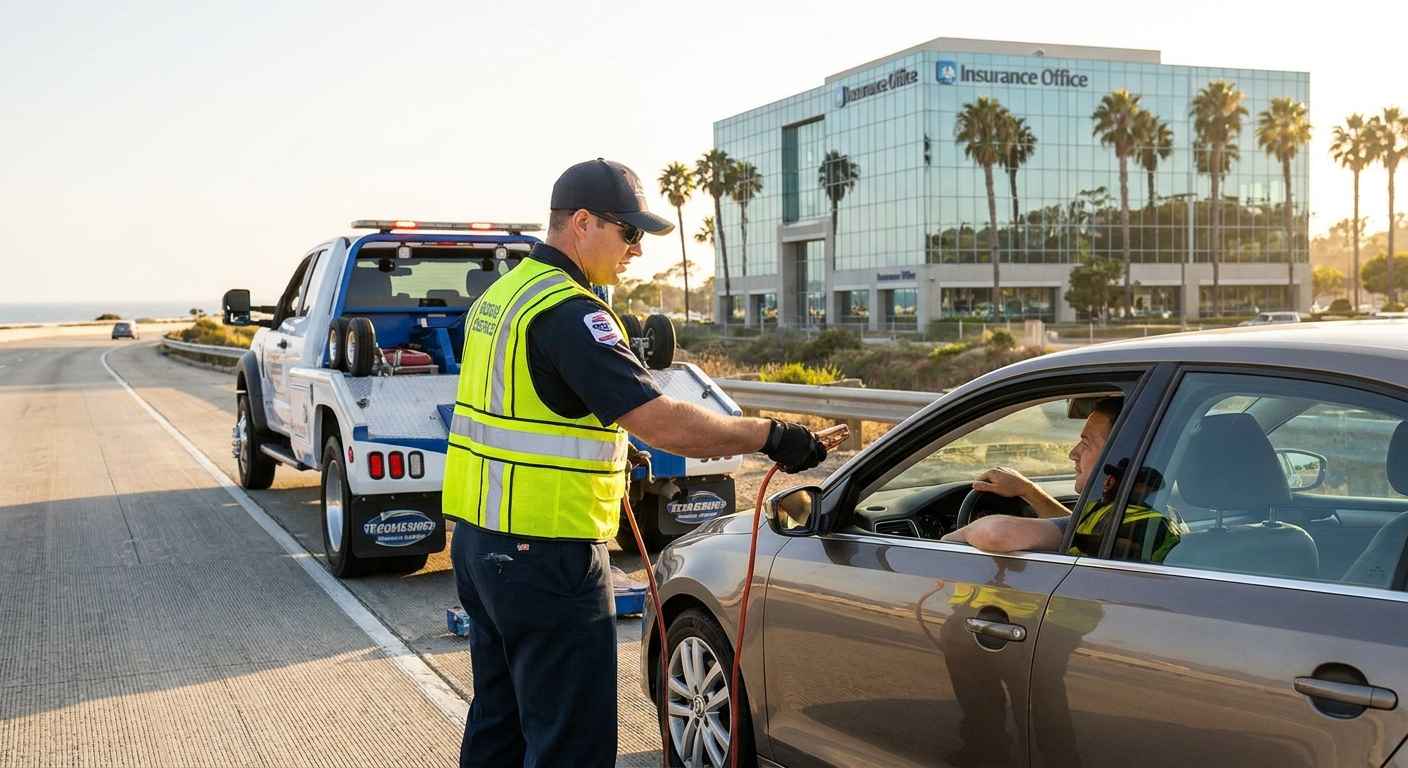
All these scenarios? They’re typically covered. A technician can come jump-start your car, change a flat, deliver a few gallons of gas, or even help you get back into your locked vehicle. It’s about getting you moving again, quickly and safely, without needing a full-blown repair shop.
Myth #2: My Car Insurance Company Always Offers the Best Deal on Roadside Help
You’d think your auto insurer, like State Farm, Farmers, or AAA, would be the go-to for roadside assistance. They often do offer it as an add-on to your policy. Sometimes it’s incredibly affordable – just a few extra dollars a month.
But wait — it’s not always the *best* or *only* option.
Consider auto clubs, like the ubiquitous AAA in California. Their memberships often include roadside assistance with different tiers of service, including varying towing distances and perks. They’ve built their whole business around it. Then there are credit card companies. Many premium credit cards offer complimentary roadside assistance as a cardholder benefit. Some new car warranties even include it for a certain period.
So, before you just tick the box on your auto insurance application, it pays to compare. Karl Susman, from California Car Insurance Pros, CA License #OB75129, often reminds his clients to look at all their options. “Sometimes, combining a basic auto policy with a separate auto club membership gives you better overall coverage and peace of mind,” he says. It’s not a one-size-fits-all situation.
Myth #3: Roadside Assistance Will Tow My Car Anywhere I Want
This is a common misconception, and it can leave you in a bind. Imagine you break down in the middle of nowhere, say near Barstow, and you want your car towed all the way back to your mechanic in San Diego. Your insurer’s roadside assistance might not cover that entire distance.
Most policies, whether through your auto insurer or an auto club, have limits on towing distance. It might be 5 miles, 10 miles, 50 miles, or even 100 miles, depending on your specific plan. If your tow exceeds that limit, you’ll be footing the bill for the extra mileage out of pocket. And those extra miles? They add up fast, especially in California where distances between towns can be vast.
Always read the fine print. Know your towing radius. It’s the difference between a free tow to the nearest reputable garage in Ventura County and a hefty bill if you’re trying to get your car from Sacramento all the way down to Orange County.
Myth #4: Using Roadside Assistance Will Make My Premiums Go Up
This one causes a lot of anxiety for drivers. Nobody wants to call for help only to see their insurance rates jump later. The short answer is yes. The real answer is more complicated.
For most insurers, calling for roadside assistance — like a jump-start or a tire change — generally doesn’t count as a “claim” that impacts your premium. It’s seen as a convenience service, much like calling customer support.
However, if you’re calling for a tow *after an accident*, that’s different. The accident itself is a claim, and that’s what could potentially affect your rates, not the towing service itself.
But here’s where it gets interesting: some insurers might track the frequency of your roadside assistance calls. If you’re calling them every other week for a dead battery because you keep leaving your lights on, they *might* flag you as a higher-risk driver. This isn’t common, but it’s not unheard of. It’s always best to use the service responsibly.
If you’re worried about your rates, or just want to explore what roadside options make the most sense for your wallet and your driving habits, it’s smart to talk to an independent agent. They can compare different policies and explain the nuances. For a personalized look at your options, you can always get a quote here: https://californiacarinsurancepros.com/quote/
Myth #5: All Roadside Assistance Plans Are the Same
Not always. Big difference. Just like car insurance policies themselves, roadside assistance plans can vary significantly in what they offer.
Some basic plans might only cover towing, a jump-start, and a lockout service. More comprehensive plans could include:
* **Extended towing distances:** More miles before you pay extra.
* **Trip interruption benefits:** If your car breaks down far from home, they might help with lodging or rental car costs. This is a huge perk if you’re driving through the Sierra Nevada and suddenly find yourself stranded.
* **Winch service:** If you slide off the road into a ditch (hopefully not!), they’ll pull you out.
* **Tire repair:** Not just changing a flat, but potentially patching a minor puncture.
* **Emergency fuel delivery:** More than just a few gallons; sometimes enough to get you to the nearest gas station.
* **Battery replacement:** Some services will even deliver and install a new battery on the spot, though you’ll pay for the battery itself.
Before you commit, ask specific questions: How many service calls are allowed per year? What’s the maximum towing distance? Are there any exclusions for certain vehicle types or locations? Knowing these details can save you a lot of grief down the road.
Myth #6: I Don’t Need It; I Have a Brand New Car
This is a common thought, especially among drivers of shiny new Teslas or reliable Toyotas. “My car won’t break down,” they say.
But new cars aren’t immune to flat tires, dead batteries (especially with all the electronics draining power), or locking your keys inside. And let’s be honest, changing a tire on the side of a busy freeway like the 10 in the Valley isn’t just inconvenient; it’s genuinely dangerous. A new car might have fewer mechanical failures, but human error and external factors still exist.
Plus, modern cars are often more complex. A flat tire on an older car might be a simple swap; on a newer vehicle with specific jacking points or run-flat tires, it can be trickier. Some new vehicles come with manufacturer-provided roadside assistance for the first few years, which is great. Just make sure you know the limits of that coverage. Once it expires, you’ll want a plan in place.
Myth #7: It’s Only for Emergencies
While it’s definitely for emergencies, roadside assistance is also a huge convenience. Think about it: you’re running late for work, get to your car, and the battery’s dead. Instead of frantically searching for jumper cables or bothering a neighbor, one call handles it. Or you’re parked in a tight spot in San Francisco, come back, and find a flat. Instead of wrestling with a spare tire in a cramped space, help comes to you.
It’s about peace of mind. Knowing that if something unexpected happens on your daily commute or a long weekend road trip to Lake Tahoe, you have a reliable backup plan. For many California drivers, especially those who travel frequently or have long commutes, the small cost is well worth the assurance.
Ready to explore your options for roadside assistance and overall auto insurance in California? Karl Susman and his team at California Car Insurance Pros, CA License #OB75129, are always ready to help you find the right fit for your needs. Get started with a quote here: https://californiacarinsurancepros.com/quote/
Frequently Asked Questions About California Roadside Assistance
Q: Will my roadside assistance cover my car if I get into an accident?
A: Yes, generally. If your car is undrivable after an accident, your roadside assistance will typically cover the tow to a repair shop, up to your plan’s towing limits. The accident itself, however, would be handled by the collision coverage part of your policy.
Q: Can I get roadside assistance without having full coverage car insurance?
A: Absolutely. Most insurance companies allow you to add roadside assistance as an optional coverage even if you only carry liability insurance. You can also get it through an auto club like AAA, which is separate from your insurance policy entirely.
Q: How many times can I use roadside assistance in a year?
A: This varies widely by provider and plan. Some plans offer unlimited service calls, while others might cap you at 3, 4, or 5 calls per year. Always check your policy details to understand your specific limits.
Q: What if I run out of gas on a remote highway in California?
A: Most roadside assistance plans include fuel delivery. They’ll bring you enough gas to get to the nearest gas station. You’ll usually pay for the cost of the fuel, but the delivery service itself is covered.
Q: Does roadside assistance cover RVs or motorcycles in California?
A: Not automatically. While some auto insurance policies might extend roadside assistance to these vehicles, you typically need specific RV insurance or motorcycle insurance with dedicated roadside assistance coverage. Always confirm with your provider.
This article is for informational purposes only and does not constitute financial advice.