Why Your California Car Insurance Bill Changes Just by Crossing Town
You’ve probably noticed that car insurance in California isn’t exactly cheap. But what really throws people for a loop is how wildly the cost can swing just by moving a few miles down the road. It’s frustrating, isn’t it? One minute you’re paying a reasonable rate in Ventura County, and the next, after moving to a new zip code in Los Angeles, your premium jumps through the roof. It feels unfair, almost random. But there’s a method to the madness, even if it’s a deeply irritating one.
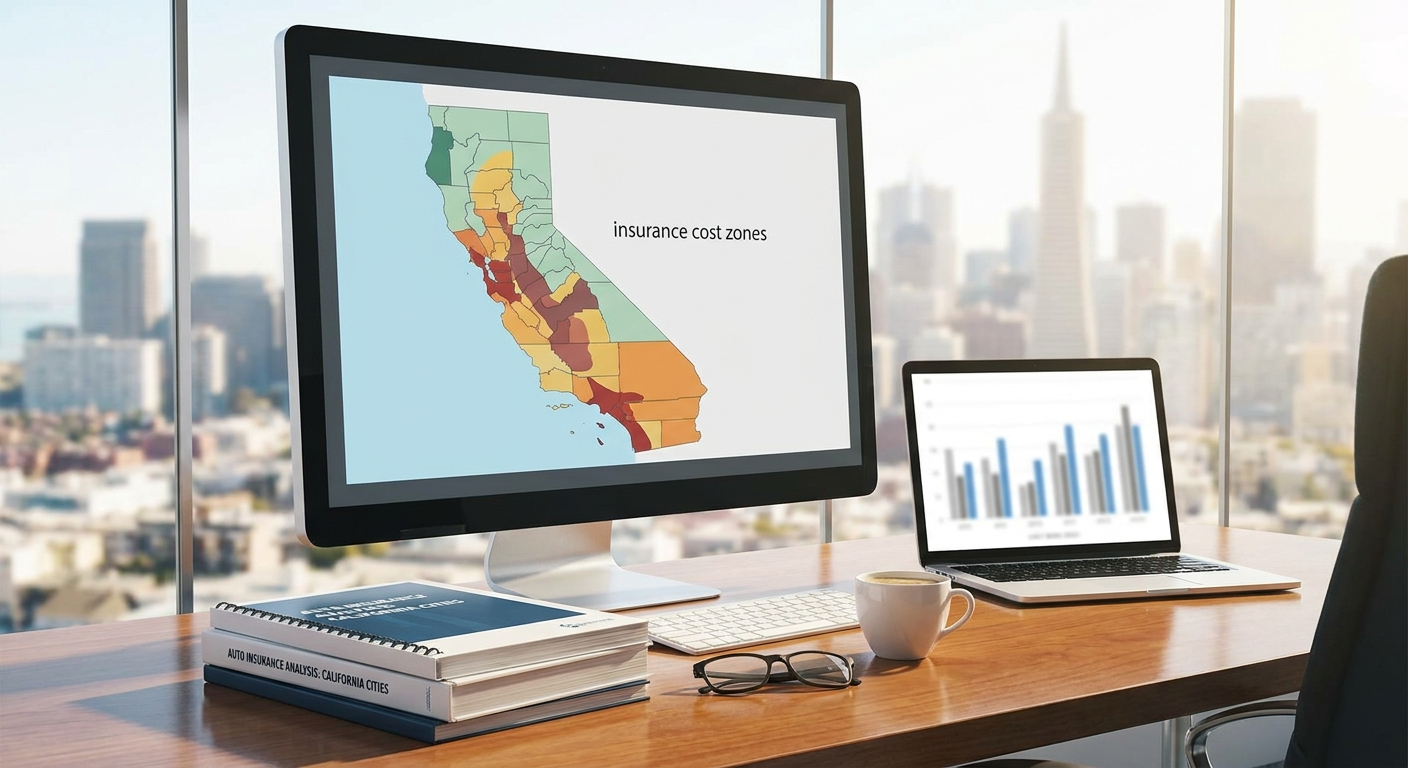
Honestly, it’s not just about the state of California – though our state certainly has its own quirks when it comes to insurance. Every insurer looks at risk. And that risk changes dramatically from one neighborhood to the next. Think about it: a quiet cul-de-sac in Santa Clarita is a world away from the bustling streets of downtown San Francisco, or even a busy intersection in the Inland Empire. The chances of an accident, or your car getting stolen, are simply different.
The Real Reasons Your City Impacts Your Rates
So, what exactly are insurers looking at when they pinpoint a specific city or even a zip code? It boils down to a few key things, all tied to the likelihood of them having to pay out a claim.
- Accident Frequency: Cities with heavy traffic, complex intersections, and lots of commuters tend to see more fender-benders. Places like Long Beach or certain parts of San Jose, with their dense populations and intricate freeway systems, often have higher accident rates than, say, a rural town in Mendocino County. More accidents mean more claims. More claims mean higher premiums for everyone in that area.
- Theft Rates: Car theft is a huge problem in some California cities. Oakland, for example, has consistently battled high auto theft numbers. If you live in an area known for carjackings or rampant break-ins, insurers will naturally see you as a higher risk. They’re trying to cover the cost of replacing your stolen vehicle or fixing smashed windows.
- Vandalism and Property Crime: It’s not just about full-on theft. If an area sees a lot of minor property crime – smashed headlights, slashed tires, graffiti – that also adds to the risk profile. These small claims add up quickly for insurance companies.
- Repair Costs: This one’s a bit more subtle. Some urban areas have higher labor costs for auto repairs. If the average body shop bill in Beverly Hills is significantly higher than in Bakersfield, that difference can trickle down into premiums.
- Local Driving Habits: While harder to quantify, insurers do look at aggregated data. Are drivers in a particular city known for speeding? For aggressive driving? For failing to yield? These collective habits, over time, can contribute to higher accident rates and thus, higher insurance costs for that locale.
It’s a complex algorithm, really. Insurers are gathering data from police reports, DMV records, and their own past claims history. They’re mapping out these risks, sometimes down to individual zip codes. That’s why moving from one side of Los Angeles to another – say, from a quieter neighborhood in the Valley to a bustling area closer to downtown – can trigger a noticeable rate change. It’s not a personal attack; it’s simply how the numbers shake out.
California’s Unique Insurance Landscape
Here’s where it gets interesting. California has some very specific rules thanks to Proposition 103, passed way back in 1988. This law fundamentally changed how insurance companies calculate rates here. Unlike many other states, California insurers can’t just slap you with a higher premium solely because of your credit score. They also have a strict hierarchy of factors they must use to determine your good driver discount.
The primary factors for setting your base rate in California are:
- Your driving record (tickets, accidents)
- The number of miles you drive each year
- Your years of driving experience
But wait — your geographic location, your vehicle type, and other factors *do* come into play after those primary ones are considered. So, while your location isn’t the *most* important factor by law, it absolutely still influences the final price you pay. It’s a layer added on top of your personal driving history.
Which brings up something most people miss. Even with Prop 103, the California insurance market has been incredibly turbulent lately. We’ve seen major players like State Farm and Farmers pull back from writing new policies in certain areas or even entirely, citing “historic increases in costs.” Repair costs have jumped, inflation is a beast, and even the threat of wildfires, while not directly tied to auto insurance, makes insurers look at the overall risk of doing business in California. This means fewer options and generally higher prices across the board, even in areas that might have seemed affordable before 2023.
Finding Your Way Through the Maze
When you’re facing those soaring premiums or struggling to even find an insurer willing to cover you, it’s easy to feel defeated. You might think, “Well, this is just my lot in life because I live in San Diego,” or “I guess I just have to pay whatever AAA tells me.” Not always. That’s a common misconception that can cost you hundreds, even thousands, of dollars a year.
The short answer is yes, your city dramatically affects your car insurance rates. The real answer is more complicated, because even within the same city, different insurers weigh those risks differently. One company might be particularly sensitive to theft rates, while another focuses more on accident frequency. This is precisely where someone like Karl Susman steps in.
Karl, from California Car Insurance Pros, has spent years – decades, even – understanding the ins and outs of the California insurance market. He knows which companies are more forgiving of a ding on your driving record, which ones offer better rates for certain car types, and critically, which ones have more favorable pricing models for specific California cities and zip codes. He’s seen it all, from clients struggling to find coverage after a few accidents to seniors feeling priced out of their long-time policies.
He’s not just selling you a policy; he’s acting as your advocate. He understands that your situation is unique, and he’ll take the time to listen, explain the complexities, and then shop around on your behalf. Because as an independent agent, he isn’t tied to just one company. He works with dozens of different insurers, meaning he can compare options and find the best fit for your specific needs – and your specific address.
Maybe you live in an area of Los Angeles County that’s seen a spike in theft, but you also have a pristine driving record. Karl can help find an insurer that prioritizes your excellent driving history over the zip code’s statistics. Or perhaps you’re in a more rural part of Northern California, but you’ve had a few unfortunate incidents. He knows which companies are still writing policies and offering competitive rates, even for those who’ve had some bad luck.
You don’t have to accept the first quote you get, especially not in a market as volatile and complex as California’s. A little bit of expert help can make a big difference in your monthly budget and your peace of mind.
If you’re tired of feeling like your car insurance rates are a mystery, or if you just want to make sure you’re getting the best possible deal for your California address, it’s time to talk to an expert. Don’t let the confusion of city-specific rates keep you paying too much. Get a personalized quote today and see how much you could save.

Frequently Asked Questions About California Car Insurance by City
Q: Can my zip code really make *that* much of a difference in my premium?
A: Absolutely. While California law (Prop 103) dictates that your driving record, annual mileage, and years of experience are the primary rating factors, your geographic location is still a significant secondary factor. Differences in accident rates, theft, and vandalism from one zip code to another can lead to hundreds of dollars in premium variation, even within the same city.
Q: What if I move to a new city in California? Will my rates automatically change?
A: Yes, they almost certainly will. When you notify your insurer of a new address, they’ll re-evaluate your policy based on the risk factors associated with your new location. It’s crucial to update your address promptly, not just for rate accuracy but because failing to do so could lead to a claim being denied if your policy information isn’t current.
Q: My city has low crime and traffic. Why are my rates still high?
A: Even in areas with lower local risk, other factors contribute to your premium. Your personal driving record (tickets, accidents), the type of vehicle you drive (is it expensive to repair or frequently stolen?), and the overall state of the California insurance market (rising repair costs, inflation, insurers pulling back) all play a role. An independent agent like Karl Susman can help you understand all the contributing factors.
Q: Is there anything I can do to lower my rates if I live in a high-cost city?
A: Definitely. Focus on what you can control: maintain a clean driving record, consider driving fewer miles if possible, and look into discounts (good student, multi-policy, safe driver programs). Most importantly, shop around! Different insurers weigh location risk differently. Working with an independent agent who can compare multiple companies is your best bet to find a more favorable rate, even in a pricier area.
When it feels like the system is working against you, remember that you have options. Karl Susman, with California Car Insurance Pros (CA License #OB75129), is ready to help you navigate the complexities of California auto insurance. Give him a call at (877) 411-5200, or simply request a personalized quote online. You deserve clear answers and a fair price.
This article is for informational purposes only and does not constitute financial advice.